Metabolic
5 amino 1mq benefits come from mouse studies of diet-induced obesity, not human trials. See what was reported, what was added later and how to read claims.
In published research, the majority of participants tolerated supplementation without serious adverse events. Most side effects were mild, transient, and self-resolving.
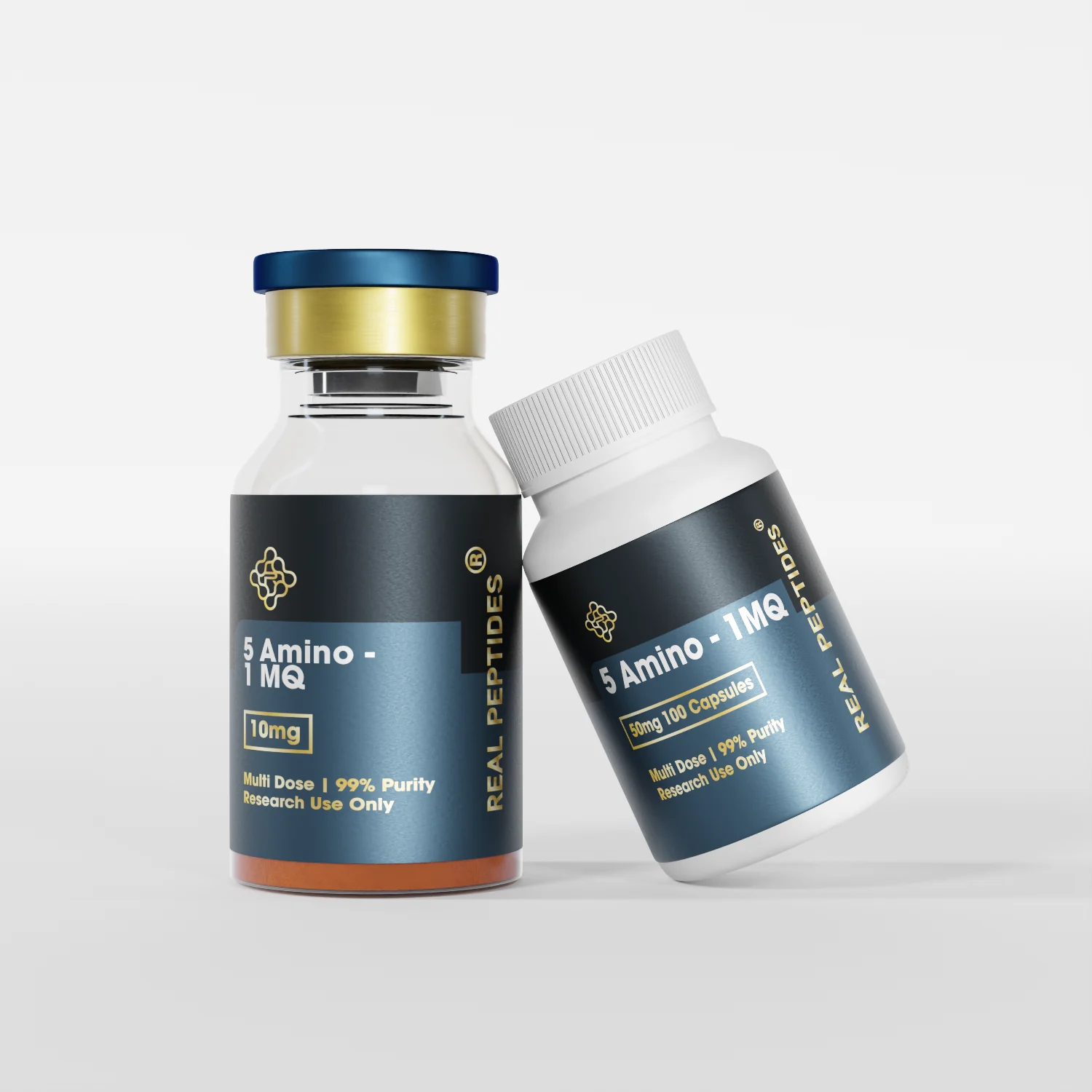
All the claimed 5 amino 1mq benefits trace back to one kind of evidence: mouse studies of diet-induced obesity, in which blocking the enzyme NNMT reduced fat mass and body weight. As of November 2026 there are no published controlled human trials. The compound is not FDA-approved and is sold at $33.60 a capsule pack as a research chemical, not a supplement.
That gap between a narrow animal finding and the broad promises on some storefronts is what this page is about. I read a lot of vendor copy, and the benefit lists tend to grow with each retelling while the underlying data stays the same size.
The benefits are drawn from rodent experiments, specifically mice made obese by a high-fat diet. Researchers use this model because it reproduces some features of metabolic disease quickly and cheaply.
The model is useful for one question: does interfering with a pathway change fat storage in an animal? It does not answer whether the same thing happens in a human body, which has different metabolism, different lifespan and different exposure to the compound.
When a vendor lists 5 amino 1mq benefits without naming the model, the reader loses the most important context. "Reduced fat mass" and "reduced fat mass in obese mice" are very different statements, and only the second one is supported.
In diet-induced obese mice, treatment with 5-Amino-1MQ was reported to lower fat mass and body weight. Those two outcomes are the core of the published animal work, and they are the only ones the facts we rely on support.
The proposed reason sits in the enzyme. NNMT uses nicotinamide, a form of vitamin B3 that feeds into NAD+, and blocking it is thought to shift how fat cells handle energy. Our guide to NNMT covers that mechanism in plain terms.
Mouse results are a starting point, not a forecast for people. Many compounds that changed body weight in rodents never showed the same effect, or showed unacceptable side effects, once tested in humans.
Three differences matter most here. Mice clear many compounds faster than people do. The doses used in lab animals are chosen for the experiment and cannot be turned into a human amount by simple scaling. And short studies cannot reveal problems that show up after long exposure.
That is why the weight result needs its own careful reading. The 5-Amino-1MQ and weight loss page goes through what the animal data does and does not support.
Most of the extra benefits you will see online are not backed by the published 5-Amino-1MQ research we know of. They are extrapolations from the mechanism or borrowed from other compounds.
Common add-ons to the 5 amino 1mq benefits list include energy, muscle preservation, "anti-ageing" and better blood sugar. Some of these come from NAD+ marketing, since NNMT sits near the NAD+ pathway, and some come from forum anecdotes. None has been confirmed in controlled human trials for 5-Amino-1MQ.
| Claim you may see | Where it comes from | Status |
|---|---|---|
| Fat loss | Mouse studies, diet-induced obesity | Animal data only |
| Weight loss | Mouse studies, diet-induced obesity | Animal data only |
| More energy | Borrowed from NAD+ marketing | Not shown for this compound |
| Anti-ageing | Mechanism speculation | Not shown for this compound |
| Muscle effects | Forum anecdotes | Not shown in controlled trials |
There is also a regulatory reason to be wary. On 24 August 2026 FDA sent warning letters to five online peptide vendors and said disease claims on a website count as evidence that products are meant for human use. A storefront promising health outcomes is taking that risk.
Read every benefit claim by asking which species, which study design and which outcome it rests on. If the page cannot answer those, treat the claim as marketing.
We list the product because researchers buy it, not because the 5 amino 1mq benefits are proven in people. It remains a research compound without FDA approval, and anyone weighing it for personal health reasons should talk to their doctor first.
All the claimed 5 amino 1mq benefits trace back to one kind of evidence: mouse studies of diet-induced obesity, in which blocking the enzyme NNMT reduced fat mass and body weight. As of November 2026 there are no published controlled human trials. The compound is not FDA-approved and is sold at $33.60 a capsule pack as a research chemical, not a supplement.
That gap between a narrow animal finding and the broad promises on some storefronts is what this page is about. I read a lot of vendor copy, and the benefit lists tend to grow with each retelling while the underlying data stays the same size.
The benefits are drawn from rodent experiments, specifically mice made obese by a high-fat diet. Researchers use this model because it reproduces some features of metabolic disease quickly and cheaply.
The model is useful for one question: does interfering with a pathway change fat storage in an animal? It does not answer whether the same thing happens in a human body, which has different metabolism, different lifespan and different exposure to the compound.
When a vendor lists 5 amino 1mq benefits without naming the model, the reader loses the most important context. "Reduced fat mass" and "reduced fat mass in obese mice" are very different statements, and only the second one is supported.
In diet-induced obese mice, treatment with 5-Amino-1MQ was reported to lower fat mass and body weight. Those two outcomes are the core of the published animal work, and they are the only ones the facts we rely on support.
The proposed reason sits in the enzyme. NNMT uses nicotinamide, a form of vitamin B3 that feeds into NAD+, and blocking it is thought to shift how fat cells handle energy. Our guide to NNMT covers that mechanism in plain terms.
Mouse results are a starting point, not a forecast for people. Many compounds that changed body weight in rodents never showed the same effect, or showed unacceptable side effects, once tested in humans.
Three differences matter most here. Mice clear many compounds faster than people do. The doses used in lab animals are chosen for the experiment and cannot be turned into a human amount by simple scaling. And short studies cannot reveal problems that show up after long exposure.
That is why the weight result needs its own careful reading. The 5-Amino-1MQ and weight loss page goes through what the animal data does and does not support.
Most of the extra benefits you will see online are not backed by the published 5-Amino-1MQ research we know of. They are extrapolations from the mechanism or borrowed from other compounds.
Common add-ons to the 5 amino 1mq benefits list include energy, muscle preservation, "anti-ageing" and better blood sugar. Some of these come from NAD+ marketing, since NNMT sits near the NAD+ pathway, and some come from forum anecdotes. None has been confirmed in controlled human trials for 5-Amino-1MQ.
| Claim you may see | Where it comes from | Status |
|---|---|---|
| Fat loss | Mouse studies, diet-induced obesity | Animal data only |
| Weight loss | Mouse studies, diet-induced obesity | Animal data only |
| More energy | Borrowed from NAD+ marketing | Not shown for this compound |
| Anti-ageing | Mechanism speculation | Not shown for this compound |
| Muscle effects | Forum anecdotes | Not shown in controlled trials |
There is also a regulatory reason to be wary. On 24 August 2026 FDA sent warning letters to five online peptide vendors and said disease claims on a website count as evidence that products are meant for human use. A storefront promising health outcomes is taking that risk.