Metabolic
What NNMT is, how it links to NAD+ and how an nnmt inhibitor like 5-Amino-1MQ is thought to work, with the limits of the mouse-only evidence.
The best-known NNMT inhibitor on the research market, 5-Amino-1MQ, sells for $33.60 as a capsule, yet very few buyers can say what the enzyme it targets actually does. NNMT stands for nicotinamide N-methyltransferase. The name describes its job: it adds a methyl group to nicotinamide, a form of vitamin B3. In mouse studies of diet-induced obesity, blocking it with 5-Amino-1MQ reduced fat mass and body weight.
This page explains the enzyme, its link to NAD+, and what the inhibitor idea does and does not prove. I keep the biochemistry short, because the useful part for buyers is understanding where the evidence stops.
NNMT is an enzyme that tags nicotinamide with a methyl group, turning it into a form the body then clears. It is one of many enzymes that decide how much of a nutrient is used and how much is discarded.
Nicotinamide is not a minor molecule. It is a form of vitamin B3 and a building block the body recycles into NAD+. When NNMT methylates nicotinamide, that molecule is taken out of the recycling loop.
The enzyme is found in several tissues, not only in fat, and research groups study it in liver and fat models among others. That point comes back later, because a drug aimed at fat cells would also reach those other tissues.
NNMT links to NAD+ because both draw on the same supply of nicotinamide. NAD+ (nicotinamide adenine dinucleotide) is a coenzyme in every cell and is central to energy metabolism.
The idea researchers explore is simple: if NNMT consumes less nicotinamide, more may stay available for NAD+ pathways, and fat cells may handle energy differently. That idea is a hypothesis drawn from lab and animal work, not a proven effect in people.
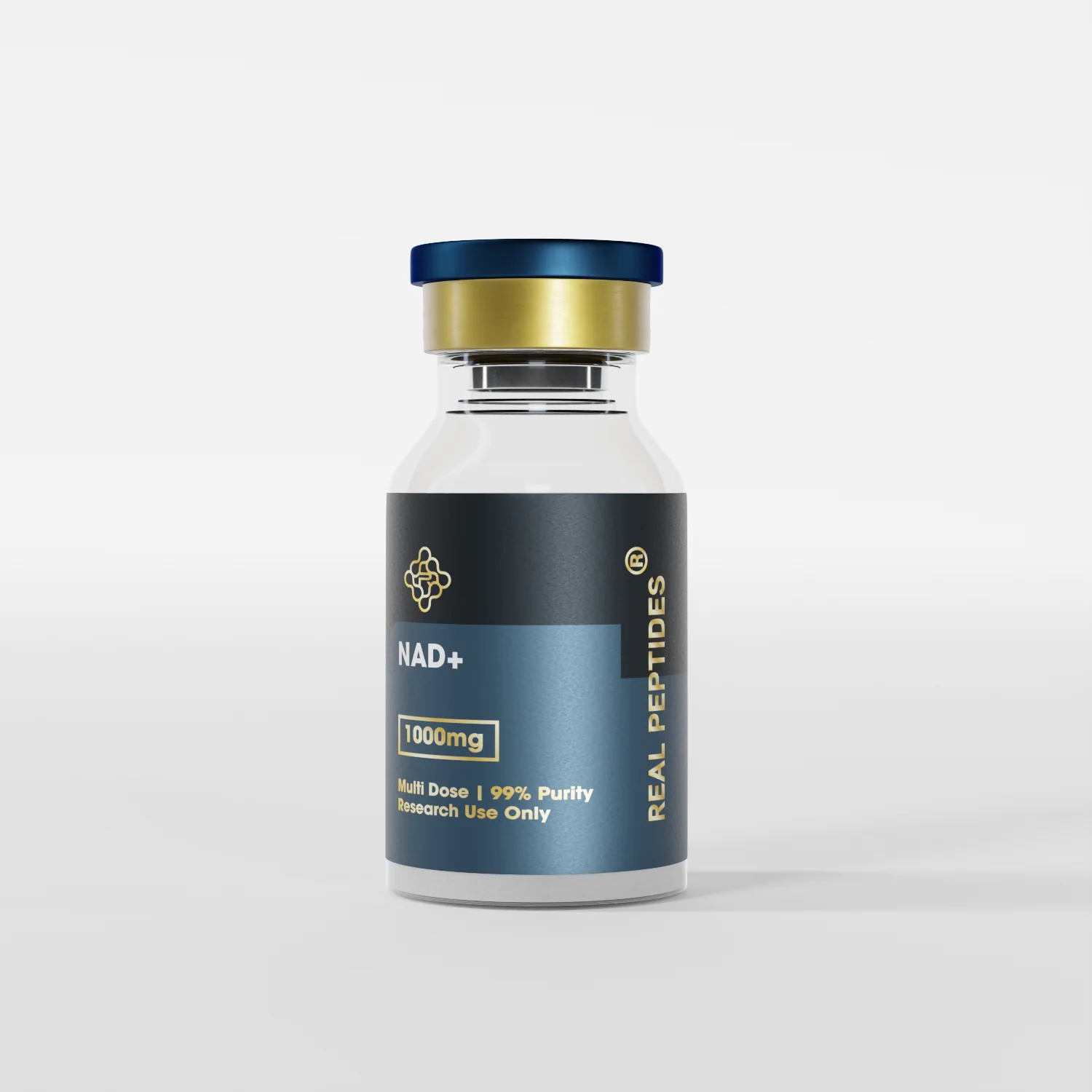
This link also explains why vendors place 5-Amino-1MQ beside NAD+ products. Real Peptides lists an NAD+ multi-dose vial at $60.00 for research use, and the metabolic compounds comparison sets the two next to each other.
An NNMT inhibitor is supposed to slow the enzyme down so that less nicotinamide is methylated. In practice, the evidence for what follows comes from animal models.
Steps one and two describe a mechanism. Step three is a proposal. Step four is the actual measured result, and it was measured in mice. The benefits page goes through that outcome in more detail.
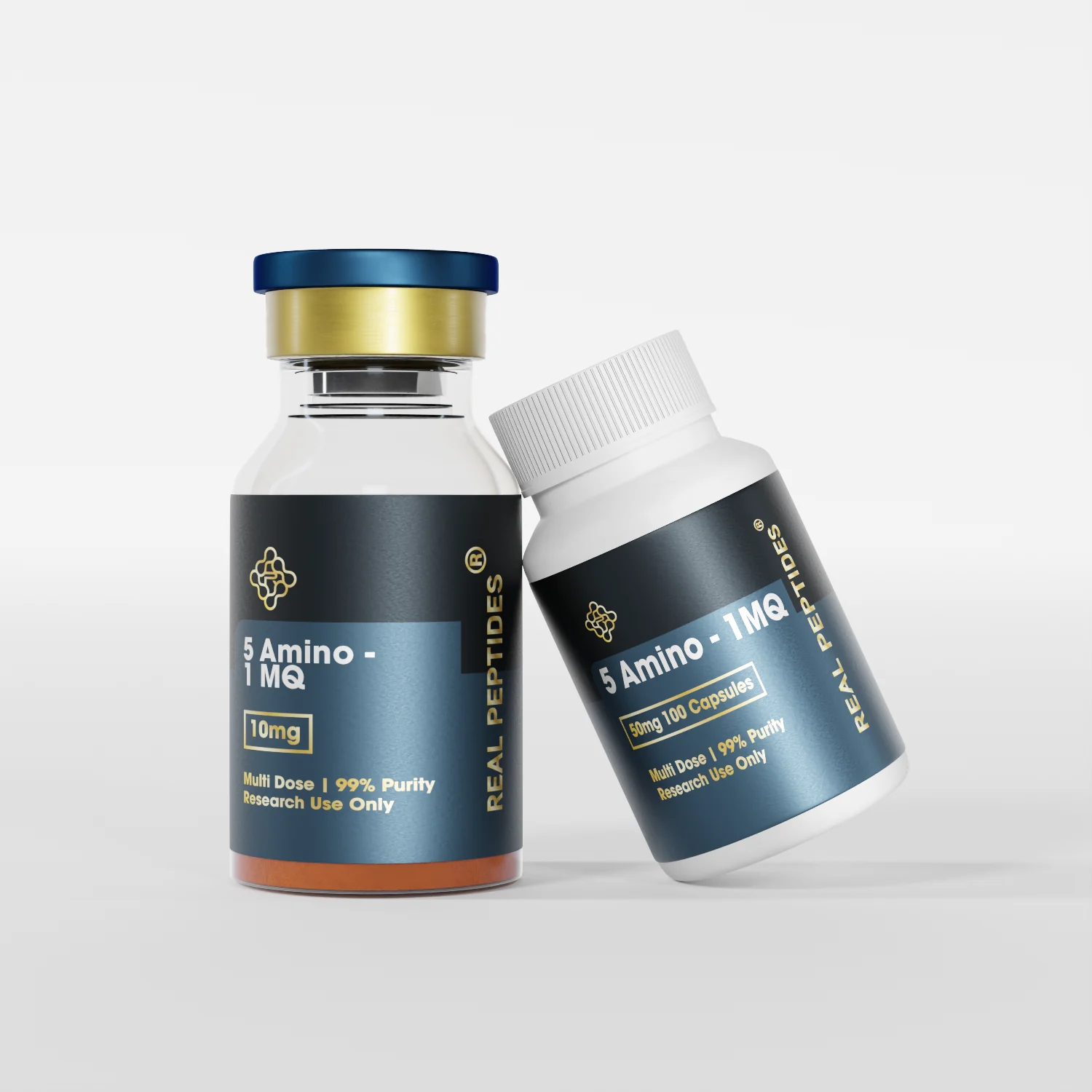
5-Amino-1MQ is the NNMT inhibitor most buyers encounter, and it is a small molecule rather than a peptide. Research vendors still list it as "5-Amino-1MQ Peptide" because they sell it alongside peptides.
| Fact | 5-Amino-1MQ |
|---|---|
| Target | NNMT enzyme |
| Chemical type | Small molecule |
| Main evidence | Mouse studies, diet-induced obesity |
| Controlled human trials | None published |
| FDA status | Not approved |
| Listing we track | Real Peptides capsule, $33.60, third-party COA |
It was not among the compounds reviewed by FDA's compounding advisory committee in July 2026, and it was not named in FDA's 24 August 2026 warning letters to five online peptide vendors. Neither fact says anything about safety; they only mean regulators have not acted on it specifically. Absence from a warning letter is not a clean bill of health.
The NNMT story has clear limits: it is a mechanism with animal results, and nothing more has been established. Several gaps remain open.
Those gaps are why the side effects page is mostly a list of unknowns. It is also why the mechanism, however tidy it looks on paper, should not be read as a promise.
We find the NNMT inhibitor concept genuinely interesting as research. As a product, 5-Amino-1MQ is an unapproved chemical sold for laboratory use, and anyone thinking about their own metabolism should talk to their doctor about approved options.
The best-known NNMT inhibitor on the research market, 5-Amino-1MQ, sells for $33.60 as a capsule, yet very few buyers can say what the enzyme it targets actually does. NNMT stands for nicotinamide N-methyltransferase. The name describes its job: it adds a methyl group to nicotinamide, a form of vitamin B3. In mouse studies of diet-induced obesity, blocking it with 5-Amino-1MQ reduced fat mass and body weight.
This page explains the enzyme, its link to NAD+, and what the inhibitor idea does and does not prove. I keep the biochemistry short, because the useful part for buyers is understanding where the evidence stops.
NNMT is an enzyme that tags nicotinamide with a methyl group, turning it into a form the body then clears. It is one of many enzymes that decide how much of a nutrient is used and how much is discarded.
Nicotinamide is not a minor molecule. It is a form of vitamin B3 and a building block the body recycles into NAD+. When NNMT methylates nicotinamide, that molecule is taken out of the recycling loop.
The enzyme is found in several tissues, not only in fat, and research groups study it in liver and fat models among others. That point comes back later, because a drug aimed at fat cells would also reach those other tissues.
NNMT links to NAD+ because both draw on the same supply of nicotinamide. NAD+ (nicotinamide adenine dinucleotide) is a coenzyme in every cell and is central to energy metabolism.
The idea researchers explore is simple: if NNMT consumes less nicotinamide, more may stay available for NAD+ pathways, and fat cells may handle energy differently. That idea is a hypothesis drawn from lab and animal work, not a proven effect in people.
This link also explains why vendors place 5-Amino-1MQ beside NAD+ products. Real Peptides lists an NAD+ multi-dose vial at $60.00 for research use, and the metabolic compounds comparison sets the two next to each other.
An NNMT inhibitor is supposed to slow the enzyme down so that less nicotinamide is methylated. In practice, the evidence for what follows comes from animal models.
Steps one and two describe a mechanism. Step three is a proposal. Step four is the actual measured result, and it was measured in mice. The benefits page goes through that outcome in more detail.
5-Amino-1MQ is the NNMT inhibitor most buyers encounter, and it is a small molecule rather than a peptide. Research vendors still list it as "5-Amino-1MQ Peptide" because they sell it alongside peptides.
| Fact | 5-Amino-1MQ |
|---|---|
| Target | NNMT enzyme |
| Chemical type | Small molecule |
| Main evidence | Mouse studies, diet-induced obesity |
| Controlled human trials | None published |
| FDA status | Not approved |
| Listing we track | Real Peptides capsule, $33.60, third-party COA |
It was not among the compounds reviewed by FDA's compounding advisory committee in July 2026, and it was not named in FDA's 24 August 2026 warning letters to five online peptide vendors. Neither fact says anything about safety; they only mean regulators have not acted on it specifically. Absence from a warning letter is not a clean bill of health.